Midnight Delivery is a cozy life simulation game that I worked on as the Design Lead.

In this game, the player takes the role of a witch who is tasked with brewing and delivering potions to the other residents of the Tongari Islands, the collection of islands that the game is set on. This allows the player to build their dream house, which was previously sold to them in the form of a cardboard-cutout facade.

On this project, my responsibilities were:

  • Creating the game world within a team of 5, composed of level designers, environmental artists, and prop artists

  • Crafted intentional compositions and reveals within the game world using trees, cliffs, rocks, logs, bushes, and other naturally occurring elements in the world to engage the player

  • Overseeing and tracking the completion of tasks from the designers on the team using an online task tracking tool

Midnight Delivery

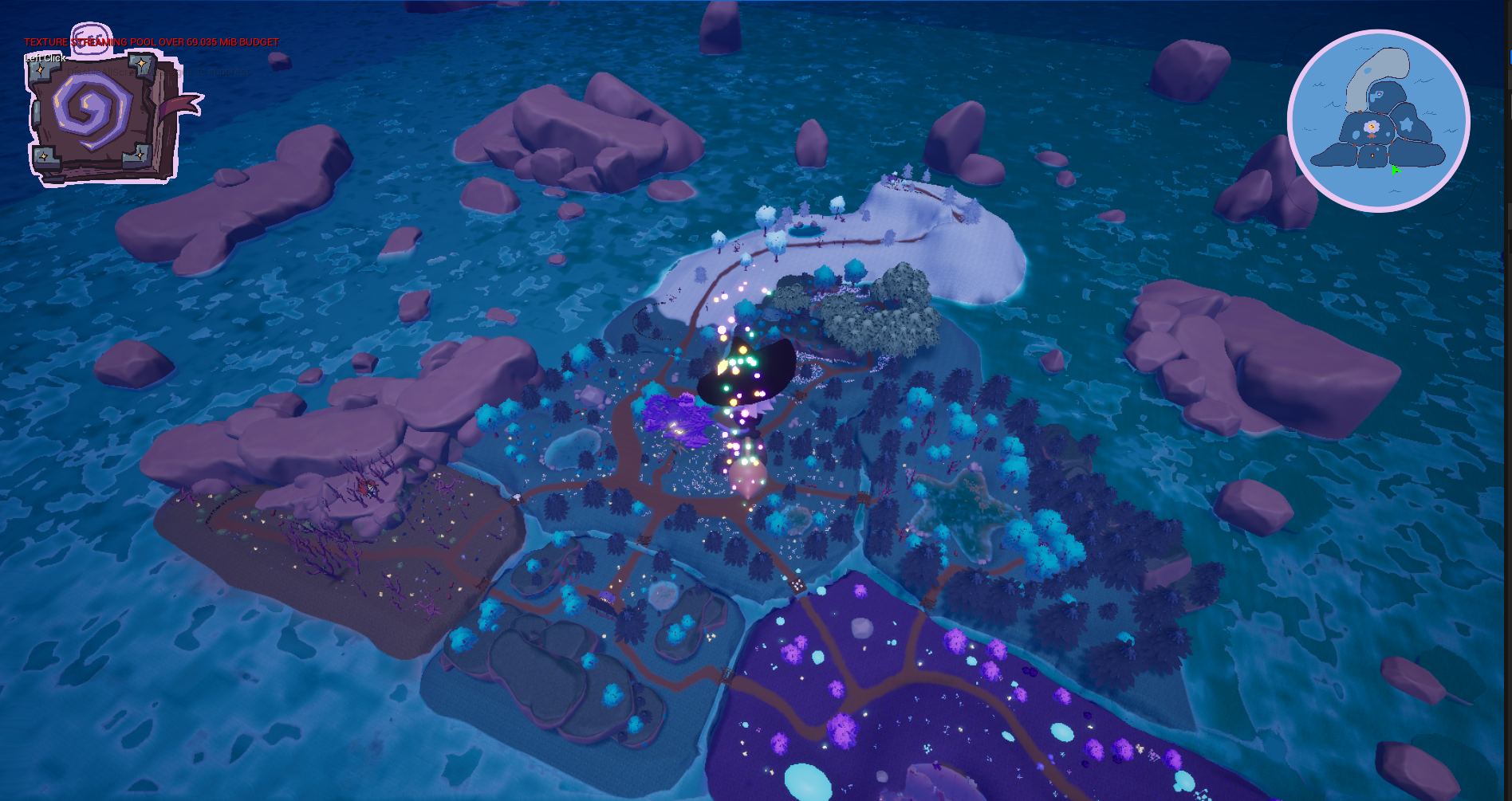
Here is an overhead view of the entire map I helped create alongside a team of level designers.

Each island is its own little world with its own personality that represents the resident who lives there.

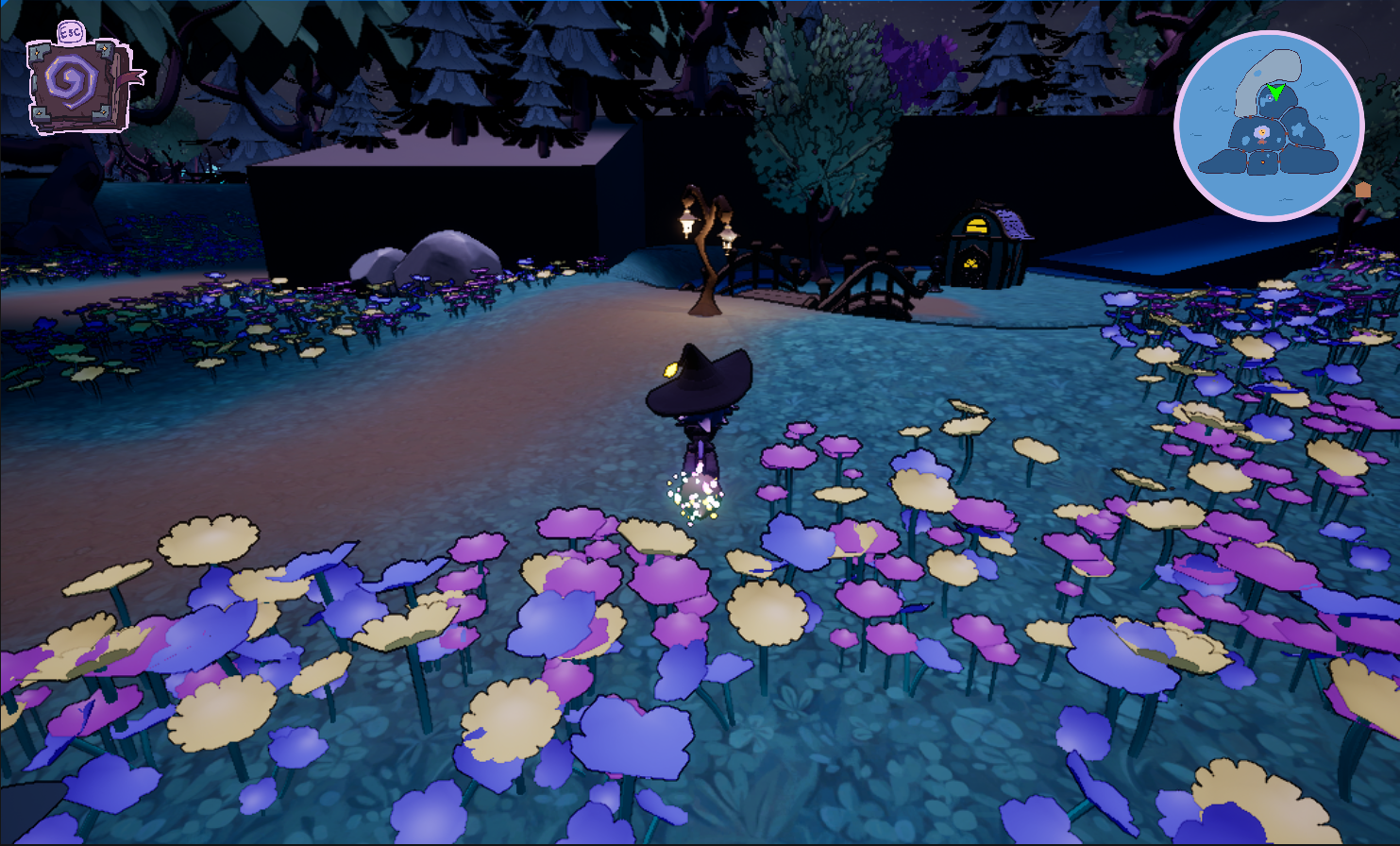
This is the flower island.

The flower island is home to a shy, melancholy NPC named Mallory, who is processing a recent heartbreak. Their home is placed on a small, flat area of land surrounded by water. A small bridge leads to the home.

The bridge and surrounding water are key parts of this composition.

The surrounding cliffs wrap almost all the way around the area in what I like to call an “environmental hug”. It creates a sense of comfort, safety, and belonging for the player, and justifies the living location of Mallory. The flowers are also a key part of creating this sense of comfort, and so is the lamppost. The primitive shapes in this composition - namely the boxy cliff and water - would be replaced with a properly modelled cliff and niagara system with baked physics to really make the scene come to life. Finally, the single tree on the small piece of land where Mallory lives is one final touch added to create some assymetry.

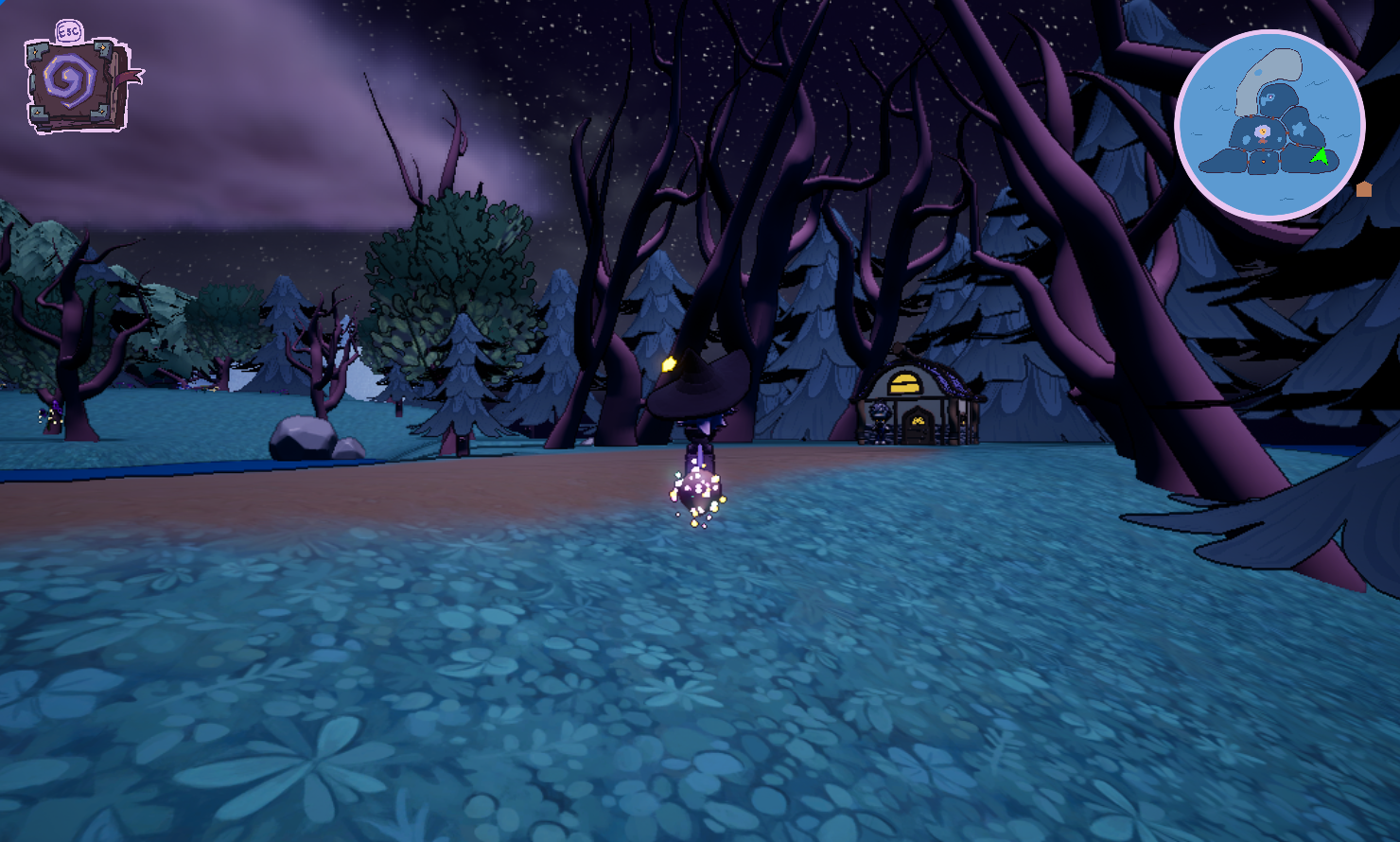
This is the forest island.

The forest island is home to a werewolf named Cane, whose werewolf urges are becoming dangerous again. Their home is lodged in a tunnel of dead trees surrrounded by a foresty backdrop and a star-shaped lake.

The dead trees obviously do a lot of the heavy lifting here, being as big as they are as well as being slanted inwards towards the house.

While creating this composition, I wanted it to almost feel like the player was a trick-or-treater during Halloween cautiously approaching a suspicious house. The backdrop of trees behind the house is quite dense, because I did not want the player to see the endless ocean water behind them (that would hurt the idea that this is a full forest). Not much foliage exists on the forest island, and this helps differentiate it from other islands that are abundantly populated with flowers and bushes. In total, this composition feels sparce, uncertain, and not super welcoming - and that’s on purpose.
Designing areas for this game was obviously quite different compared to designing levels for a game like Project Nasu, for example.

In Project Nasu, it was certain that the player would experience each challenge in the game in the exact order they were laid out. This makes it easy to create evolutions and expansions around a single basic idea of a challenge. However, in Midnight Delivery, it was possible for players to approach new areas in many different ways. The goal for this game would be to immerse the player in a space with an identiable theme.

Populating each area with certain potion ingredients was a start.

Some “common” ingredients could be ubiquitously all over the map, whereas some “rare” ingredients could only be found on specific islands out of the seven. This was one step towards giving each island a its own theme. However, it was important for more elements of each island to contribute to these themes. The individual characters add a personality to each area, and gives the player somebody and something to relate to.